




Open Mercato is a new‑era, AI‑supportive platform for shipping enterprise‑grade CRMs, ERPs, and commerce backends. It’s modular, extensible, and designed so teams can mix their own modules, entities, and workflows while keeping the guardrails of a production-ready stack.
Buy vs. build? Now, you can have best of both. Use Open Mercato enterprise ready business features like CRM, Sales, OMS, Encryption and build the remaining 20% that really makes the difference for your business.
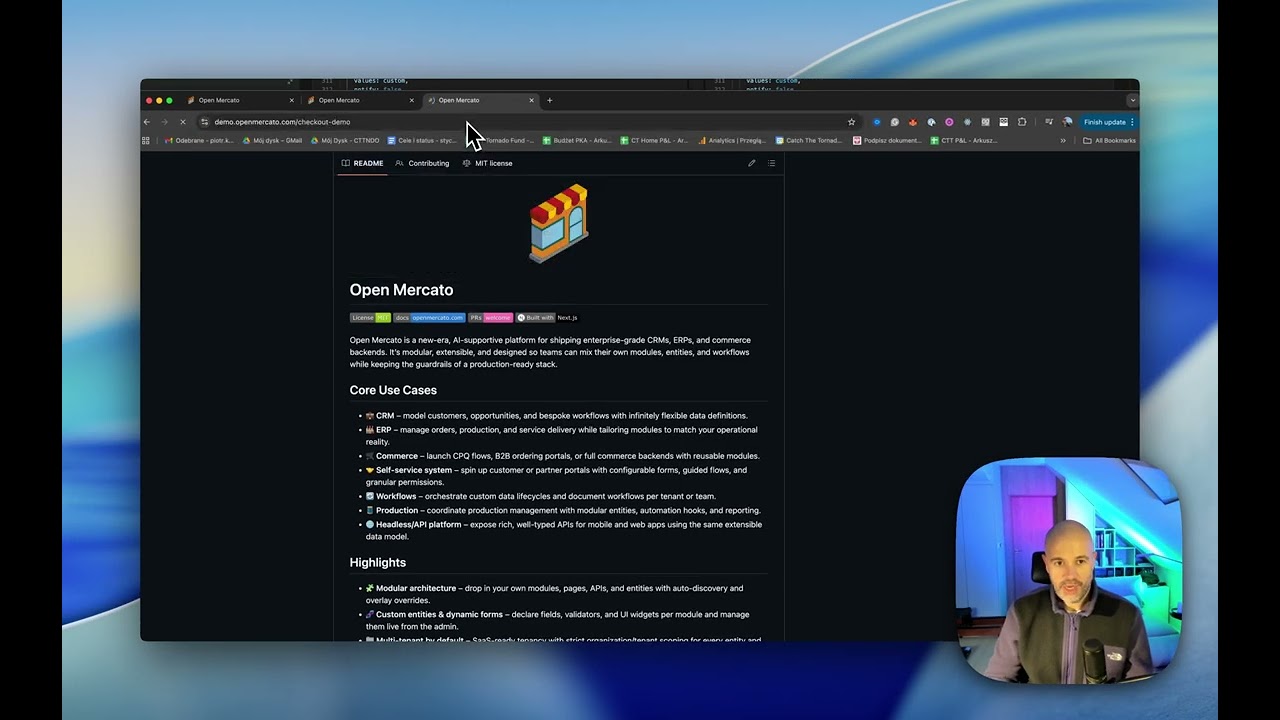
- 💼 CRM – model customers, opportunities, and bespoke workflows with infinitely flexible data definitions.
- 🏭 ERP – manage orders, production, and service delivery while tailoring modules to match your operational reality.
- 🛒 Commerce – launch CPQ flows, B2B ordering portals, or full commerce backends with reusable modules.
- 🤝 Self-service system – spin up customer or partner portals with configurable forms, guided flows, and granular permissions.
- 🔄 Workflows – orchestrate custom data lifecycles and document workflows per tenant or team.
- 🧵 Production – coordinate production management with modular entities, automation hooks, and reporting.
- 🌐 Headless/API platform – expose rich, well-typed APIs for mobile and web apps using the same extensible data model.
- 🧩 Modular architecture – drop in your own modules, pages, APIs, and entities with auto-discovery and overlay overrides.
- 🧬 Custom entities & dynamic forms – declare fields, validators, and UI widgets per module and manage them live from the admin.
- 🏢 Multi-tenant by default – SaaS-ready tenancy with strict organization/tenant scoping for every entity and API.
- 🏛️ Multi-hierarchical organizations – built-in organization trees with role- and user-level visibility controls.
- 🛡️ Feature-based RBAC – combine per-role and per-user feature flags with organization scoping to gate any page or API.
- ⚡ Data indexing & caching – hybrid JSONB indexing and smart caching for blazing-fast queries across base and custom fields.
- 🔔 Event subscribers & workflows – publish domain events and process them via persistent subscribers (local or Redis).
- ✅ Growing test coverage – expanding unit and integration tests ensure modules stay reliable as you extend them.
- 🧠 AI-supportive foundation – structured for assistive workflows, automation, and conversational interfaces.
- ⚙️ Modern stack – Next.js App Router, TypeScript, zod, Awilix DI, MikroORM, and bcryptjs out of the box.
 |
 |
 |
| Order Shipments | Organizations | Users |
 |
 |
 |
| Roles & ACL | Custom Fields | Custom Entity Records |
 |
 |
 |
| Add New Customer | Deals Pipeline | Customer Notes |
 |
|
 |
| Sales Pipeline | Order Shipments | Order Totals |
 |
 |
 |
| Catalog Products | Sales Channels | Channel Offers |

|
||
| Home overview with enabled modules list | ||
- 🧩 Modules: Each feature lives under
src/modules/<module>with auto‑discovered frontend/backend pages, APIs, CLI, i18n, and DB entities. - 🗃️ Database: MikroORM with per‑module entities and migrations; no global schema. Migrations are generated and applied per module.
- 🧰 Dependency Injection: Awilix container constructed per request. Modules can register and override services/components via
di.ts. - 🏢 Multi‑tenant: Core
directorymodule definestenantsandorganizations. Most entities carrytenant_id+organization_id. - 🔐 Security: RBAC roles, zod validation, bcryptjs hashing, JWT sessions, role‑based access in routes and APIs.
Read more on the Open Mercato Architecture
Open Mercato includes a built-in AI Assistant that can discover and interact with your data model and APIs. The assistant uses MCP (Model Context Protocol) to expose tools for schema discovery and API execution.
 |
 |
 |
| Chat Interface | Settings | MCP Tools |
Key capabilities:
- 🔍 Schema Discovery – Query database entity schemas including fields, types, and relationships
- 🔗 API Discovery – Search for API endpoints using natural language queries
- ⚡ API Execution – Execute API calls with automatic tenant context and authentication
- 🧠 Hybrid Search – Uses Meilisearch for fast fulltext + vector search across schemas and endpoints
MCP Tools:
| Tool | Purpose |
|---|---|
discover_schema |
Search entity schemas by name or keyword |
find_api |
Find API endpoints by natural language query |
call_api |
Execute API calls with tenant context |
context_whoami |
Get current authentication context |
Integration modes:
- Development (
yarn mcp:dev) – For Claude Code and local development with API key auth - Production (
yarn mcp:serve) – For web AI chat with session tokens
See the AI Assistant specification for detailed documentation on entity extraction, OpenAPI integration, and search indexing.
Open Mercato ships with tenant-scoped, field-level data encryption so PII and sensitive business data stay protected while you keep the flexibility of custom entities and fields. Encryption maps live in the admin UI/database, letting you pick which system and custom columns are encrypted; MikroORM hooks automatically encrypt on write and decrypt on read while keeping deterministic hashes (e.g., email_hash) for lookups.
Architecture in two lines: Vault/KMS (or a derived-key fallback) issues per-tenant DEKs and caches them so performance stays snappy; AES-GCM wrappers sit in the ORM lifecycle, storing ciphertext at rest while CRUD and APIs keep working with plaintext. Read the docs to dive deeper: docs.openmercato.com/user-guide/encryption.
We have migrated Open Mercato to a monorepo structure. If you're upgrading from a previous version, please note the following changes:
The codebase is now organized into:
packages/- Shared libraries and modules (@open-mercato/core,@open-mercato/ui,@open-mercato/shared,@open-mercato/cli,@open-mercato/cache,@open-mercato/events,@open-mercato/queue,@open-mercato/content,@open-mercato/onboarding,@open-mercato/search,@open-mercato/enterprise)apps/- Applications (main app inapps/mercato, docs inapps/docs)
Important note on storage: The storage folder has been moved to the apps/mercato folder as well. If you instance has got any attachments uploaded, please make sure you run:
mv storage apps/mercato/storage... from the root Open Mercato folder.
Import aliases have changed from path-based to package-based imports:
- Before:
@/lib/...,@/components/...,@/modules/... - After:
@open-mercato/shared/lib/...,@open-mercato/ui/components/...,@open-mercato/core/modules/..., etc.
The .env file now must live in apps/mercato instead of the project root.
The fastest way to start is to copy the example file:
cp apps/mercato/.env.example apps/mercato/.envAt minimum, set DATABASE_URL, JWT_SECRET, and REDIS_URL (or EVENTS_REDIS_URL) before bootstrapping.
Yarn 4 is now required. Ensure you have Yarn 4+ installed before proceeding.
This is a quickest way to get Open Mercato up and running on your localhost / server - ready for testing / demoing or for Core development!
Node.js 24.x is required
# macOS (Homebrew)
brew install node@24

# Windows (Chocolatey)
choco install nodejs --version=24.x

# Or use nvm (any platform)
nvm install 24
nvm use 24
Windows: Use Docker Setup for native setup.
Prerequisites: Yarn 4+
Quick single-line starter (ephemeral dev on a free port):
yarn dev:ephemeralgit clone https://github.com/open-mercato/open-mercato.git
cd open-mercato
git checkout develop
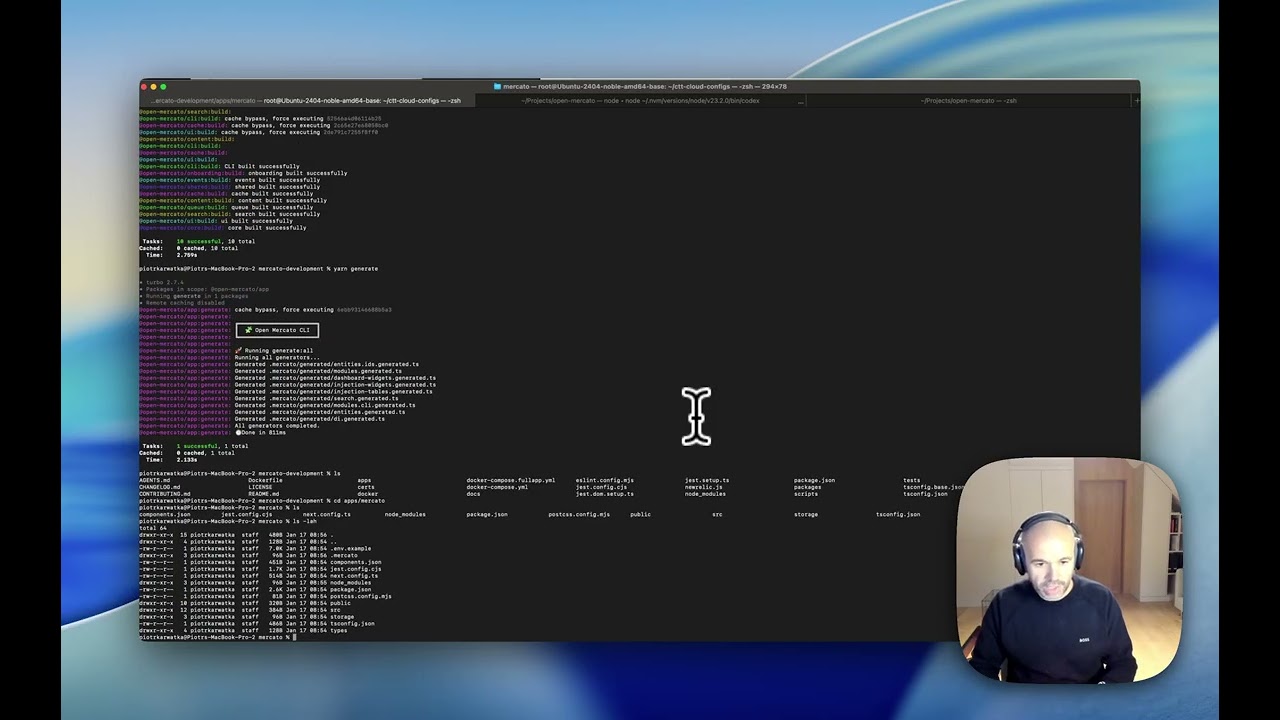
yarn install
cp apps/mercato/.env.example apps/mercato/.env # EDIT this file to set up your specific files
#At minimum, set `DATABASE_URL`, `JWT_SECRET`, and `REDIS_URL` (or `EVENTS_REDIS_URL`) before bootstrapping.
yarn generate
yarn initialize # or yarn reinstall
yarn devFor a fresh greenfield boot (build packages, generate registries, reinstall modules, then start dev), run:
yarn dev:greenfieldFor a worktree-friendly dev runtime with a dedicated ephemeral PostgreSQL database and an automatically selected free app port (with Node 24 check, dependency install, package build, .env bootstrap, generator prep, browser auto-open, and instance registry in .ai/dev-ephemeral-envs.json), run:
yarn dev:ephemeralNavigate to http://localhost:3000/backend and sign in with the default credentials printed by yarn initialize.
Full installation guide (including prerequisites, Docker setup, and cloud deployment): docs.openmercato.com/installation/setup
Open Mercato offers two Docker Compose configurations — one for development (with hot reload) and one for production. Both run the full stack (app + PostgreSQL + Redis + Meilisearch) in containers. The dev mode is the recommended setup for Windows users.
Run the entire stack with source code mounted from the host. File changes trigger automatic rebuilds — no local Node.js or Yarn required.
git clone https://github.com/open-mercato/open-mercato.git
cd open-mercato
git checkout develop
docker compose -f docker-compose.fullapp.dev.yml up --build
Windows users: Ensure WSL 2 backend is enabled in Docker Desktop and clone with git config --global core.autocrlf input to avoid line-ending issues.
docker compose -f docker-compose.fullapp.yml up --buildCommon operations:
- Start:
docker compose -f docker-compose.fullapp.yml up -d - Logs:
docker compose -f docker-compose.fullapp.yml logs -f app - Stop:
docker compose -f docker-compose.fullapp.yml down - Rebuild:
docker compose -f docker-compose.fullapp.yml up --build
Navigate to http://localhost:3000/backend and sign in with the default credentials (admin@example.com).
Before starting, you may want to configure the following environment variables. Create a .env file in the project root or export them in your shell:
| Variable | Required | Default | Description |
|---|---|---|---|
JWT_SECRET |
For production | JWT |
Secret key for JWT token signing. Use a strong, unique value in production. |
POSTGRES_PASSWORD |
For production | postgres |
PostgreSQL database password. Use a strong password in production. |
POSTGRES_USER |
No | postgres |
PostgreSQL database user |
POSTGRES_DB |
No | open-mercato |
PostgreSQL database name |
POSTGRES_PORT |
No | 5432 |
PostgreSQL exposed port |
REDIS_PORT |
No | 6379 |
Redis exposed port |
MEILISEARCH_MASTER_KEY |
For production | meilisearch-dev-key |
Meilisearch API key. Use a strong key in production. |
MEILISEARCH_PORT |
No | 7700 |
Meilisearch exposed port |
OPENAI_API_KEY |
No | - | OpenAI API key (enables AI features) |
ANTHROPIC_API_KEY |
No | - | Anthropic API key (for opencode service) |
OPENCODE_PORT |
No | 4096 |
Opencode service exposed port |
Example .env file for production:
JWT_SECRET=your-strong-secret-key-here
POSTGRES_PASSWORD=your-strong-db-password
MEILISEARCH_MASTER_KEY=your-strong-meilisearch-key
OPENAI_API_KEY=sk-...  # Optional, for AI features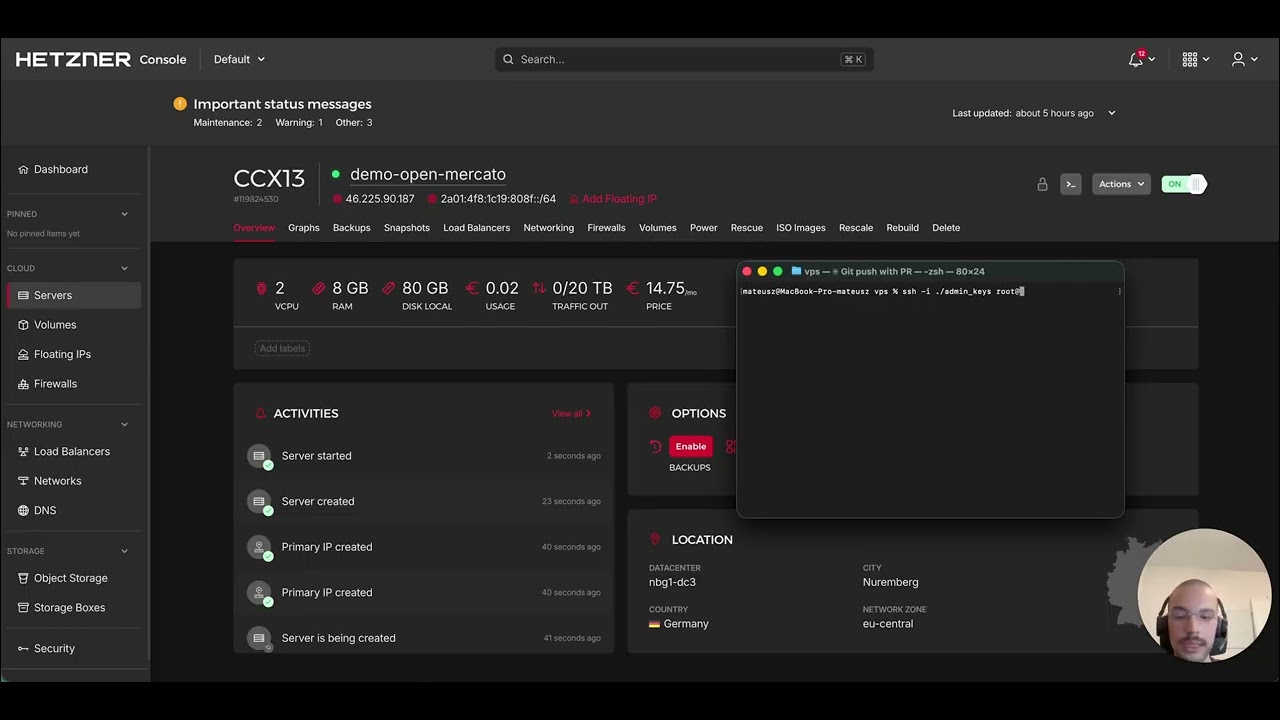
For production deployments, ensure strong JWT_SECRET, secure database credentials, and consider managed database services. See the full Docker deployment guide for detailed configuration and production tips.
The recommended way to build on Open Mercato without modifying the core is to create a standalone app. This gives you a self-contained project that pulls Open Mercato packages from npm — your own modules, overrides, and customizations live in your repo while core stays untouched and upgradeable.
npx create-mercato-app my-store
cd my-store
cp .env.example .env   # configure DATABASE_URL, JWT_SECRET, REDIS_URL
docker compose up -d   # start PostgreSQL, Redis, Meilisearch
yarn install
yarn initialize
yarn dev
Navigate to http://localhost:3000/backend and sign in with the credentials printed by yarn initialize.
Drop your own modules into src/modules/ and register them in src/modules.ts with from: '@app':
export const enabledModules: ModuleEntry[] = [
  // ... core modules
  { id: 'inventory', from: '@app' },
]
Run yarn generate and yarn dev — your module's pages, APIs, and entities are auto-discovered.
Open Mercato now supports declarative menu injection for backend chrome surfaces without touching core files.
- Create a headless widget in your module:
// src/modules/example/widgets/injection/example-menus/widget.ts
import { InjectionPosition } from '@open-mercato/shared/modules/widgets/injection-position'
import type { InjectionMenuItemWidget } from '@open-mercato/shared/modules/widgets/injection'

export default {
  metadata: { id: 'example.injection.example-menus', features: ['example.view'] },
  menuItems: [
    {
      id: 'example-todos-shortcut',
      label: 'example.menu.todosShortcut',
      href: '/backend/example/todos',
      groupId: 'example.nav.group',
      groupLabelKey: 'example.nav.group',
      placement: { position: InjectionPosition.Last },
    },
  ],
} satisfies InjectionMenuItemWidget- Map it in
widgets/injection-table.ts:
export const injectionTable = {
  'menu:sidebar:main': { widgetId: 'example.injection.example-menus', priority: 50 },
  'menu:topbar:actions': { widgetId: 'example.injection.example-menus', priority: 50 },
  'menu:topbar:profile-dropdown': { widgetId: 'example.injection.example-menus', priority: 50 },
}- Run
yarn generate.
Available surfaces: menu:sidebar:main, menu:sidebar:settings, menu:sidebar:profile, menu:topbar:actions, menu:topbar:profile-dropdown.
When you need to change the internals of a core module (entities, business logic, UI), eject it. The mercato eject command copies the module source into your src/modules/ directory and switches it to local, so you can modify it freely while all other modules keep receiving package updates.
# See which modules support ejection
yarn mercato eject --list

# Eject a module (e.g., currencies)
yarn mercato eject currencies
yarn mercato generate all
yarn dev
Currently ejectable: catalog, currencies, customers, perspectives, planner, resources, sales, staff, workflows.
Full guide: docs.openmercato.com/customization/standalone-app · CLI reference: docs.openmercato.com/cli/eject

Browse the full documentation at docs.openmercato.com.
- Introduction
- Installation
- User Guide
- Tutorials
- Customization
- Architecture
- Framework
- API Reference
- CLI Reference
- Appendix
Open Mercato follows a spec-first development approach. Before implementing new features or making significant changes, we document the design in the .ai/specs/ folder.
- Clarity: Specs ensure everyone understands the feature before coding starts
- Consistency: Design decisions are documented and can be referenced by humans and AI agents
- Traceability: Each spec maintains a changelog tracking the evolution of the feature
- Before coding: Check if a spec exists in
.ai/specs/(namedSPEC-###-YYYY-MM-DD-title.md) - New features: Create or update the spec with your design before implementation
- After changes: Update the spec's changelog with a dated summary
Naming convention: Specs use the format SPEC-{number}-{date}-{title}.md (e.g., SPEC-007-2026-01-26-sidebar-reorganization.md)
See .ai/specs/README.md for the full specification directory and .ai/specs/AGENTS.md for detailed guidelines on maintaining specs.
Connect with the team and other builders in our Discord community: https://discord.gg/f4qwPtJ3qA.
We welcome contributions of all sizes—from fixes and docs updates to new modules. Start by reading CONTRIBUTING.md for branching conventions (main, develop, feat/<feature>), release flow, and the full PR checklist. Then check the open issues or propose an idea in a discussion, and:
- Fork the repository and create a branch that reflects your change.
- Install dependencies with
yarn installand bootstrap viayarn mercato init(add--no-examplesto skip demo CRM content;--stresstestfor thousands of synthetic contacts, companies, deals, and timeline interactions; or--stresstest --litefor high-volume contacts without the heavier extras). - Develop and validate your changes (
yarn lint,yarn test, or the relevant module scripts). - Open a pull request referencing any related issues and outlining the testing you performed.
Refer to AGENTS.md for deeper guidance on architecture and conventions when extending modules.
Open Mercato is proudly supported by Catch The Tornado.

Open Mercato let the module developers to expose the custom CLI commands for variouse maintenance tasks. Read more on the CLI documentation
If you're planning to build on Open Mercato, don’t go it alone.
Reach out to us - we will connect you with one of our Certified Partner Agencies. Our Partnership Program certifies software consultancies that actively use and contribute to Open Mercato.
Our mission is simple: ensure every Open Mercato deployment is successful, secure, and scalable.
- MIT — see
LICENSEfor details. Enterprise licensing details are documented inpackages/enterprise/README.md.
Open Mercato Core is and always will be MIT Licensed, fully Open Source.
The Open Mercato Enterprise Subscription helps ensure your deployment is secure, scalable, and production-ready without surprises before go-live.
It combines certification, expert reviews, and ongoing advisory support for teams building serious systems on Open Mercato.
What’s included:
- Architecture & Production Readiness
- Pre-deployment architecture audit
- Production approval before go-live
- Hosting and deployment best practices
- Security & Quality (monthly reviews)
- Customer Success Manager (pre-go-live)
- Priority technical support channel
- Platform Continuity - access to security patches and new features
Contact us to get support for your implementation: info@openmercato.com
Enterprise features are delivered under the @open-mercato/enterprise package (/packages/enterprise) and are not part of the open source license scope.